Active filters

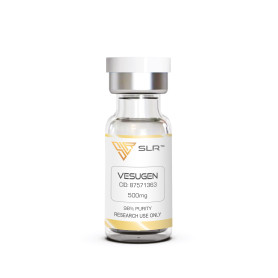
VESUGEN - 500mg
€780.00
Tax excluded
IN-STOCK
favorite_border favorite
Vesugen is a short synthetic bioregulatory peptide investigated for its role in vascular and neurovascular regulation. It belongs to a class of organ-specific peptides studied for their potential capacity to modulate gene expression patterns associated with endothelial stability, metabolic regulation, and cellular stress resistance. Experimental models have explored its interaction with genes such as p16 and p21 (cell cycle regulation), as well as pathways linked to SIRT1 activity, which is widely associated with metabolic control, stress adaptation, and longevity-related signaling mechanisms. Within neurovascular research contexts, Vesugen has been examined for its potential role in maintaining microvascular integrity and supporting oxidative balance in neural tissues. Additional research has evaluated Vesugen in the context of endothelial gene expression, nitric oxide signaling balance, and vascular membrane stability. Modulation of endothelin-1 expression and reduction of oxidative vascular markers have been reported in controlled laboratory studies. Overall, Vesugen is characterized in scientific literature as a vascular bioregulatory peptide investigated for its potential epigenetic modulation of gene expression related to endothelial function, neurovascular stability, metabolic balance, and cellular aging pathways.
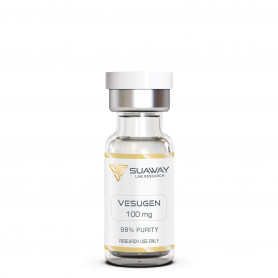
VESUGEN -100mg
€185.00
Tax excluded
IN-STOCK
favorite_border favorite
Vesugen is a short synthetic bioregulatory peptide investigated for its role in vascular and neurovascular regulation. It belongs to a class of organ-specific peptides studied for their potential capacity to modulate gene expression patterns associated with endothelial stability, metabolic regulation, and cellular stress resistance. Experimental models have explored its interaction with genes such as p16 and p21 (cell cycle regulation), as well as pathways linked to SIRT1 activity, which is widely associated with metabolic control, stress adaptation, and longevity-related signaling mechanisms. Within neurovascular research contexts, Vesugen has been examined for its potential role in maintaining microvascular integrity and supporting oxidative balance in neural tissues. Additional research has evaluated Vesugen in the context of endothelial gene expression, nitric oxide signaling balance, and vascular membrane stability. Modulation of endothelin-1 expression and reduction of oxidative vascular markers have been reported in controlled laboratory studies. Overall, Vesugen is characterized in scientific literature as a vascular bioregulatory peptide investigated for its potential epigenetic modulation of gene expression related to endothelial function, neurovascular stability, metabolic balance, and cellular aging pathways.
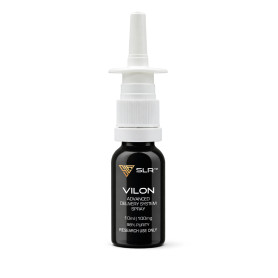
VILON - 10ml/100mg - Spray
€249.00
Tax excluded
IN-STOCK
favorite_border favorite
Vilon is a thymus-derived bioregulatory peptide commonly described as the dipeptide Lys–Glu (KE). It is studied for its potential immune-modulating effects, particularly in the context of thymus-related immune function and T-cell regulation. Research suggests Vilon may support immune cell differentiation, normalize cytokine signaling, and contribute to immune homeostasis. These properties make it relevant in studies involving immunosenescence, age-related immune decline, chronic inflammation, infection susceptibility, and immune dysfunction. By supporting balanced immune regulation rather than excessive stimulation, Vilon has become a peptide of interest in research focused on immune resilience, systemic vitality, and longevity-related immune restoration. FRESHLY PREPARED SOLUTION 
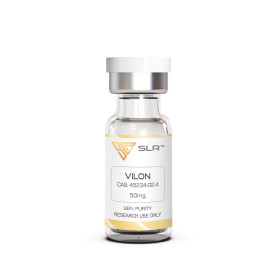
VILON - 50 mg
€120.00
Tax excluded
IN-STOCK
favorite_border favorite
Vilon is a thymus-derived bioregulatory peptide commonly described as the dipeptide Lys–Glu (KE). It is studied for its potential immune-modulating effects, particularly in the context of thymus-related immune function and T-cell regulation. Research suggests Vilon may support immune cell differentiation, normalize cytokine signaling, and contribute to immune homeostasis. These properties make it relevant in studies involving immunosenescence, age-related immune decline, chronic inflammation, infection susceptibility, and immune dysfunction. By supporting balanced immune regulation rather than excessive stimulation, Vilon has become a peptide of interest in research focused on immune resilience, systemic vitality, and longevity-related immune restoration.
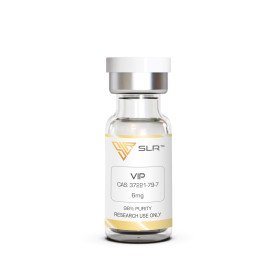
VIP - VASOACTIVE INTESTINAL PEPTIDE - 6 mg
€59.00
Tax excluded
IN-STOCK
favorite_border favorite
VIP (Vasoactive Intestinal Peptide) is a 28–amino acid neuropeptide of the secretin–glucagon family, widely expressed in the brain, gastrointestinal tract, pancreas, lungs, heart, thyroid, adrenal glands, and thymus. It acts through the GPCR receptors VPAC1 and VPAC2, activating cAMP-related signaling pathways that regulate vascular tone, immune balance, secretion mechanisms, and neuronal survival. Research suggests VIP has neuroprotective and neurotrophic properties, supporting blood–brain barrier integrity, reducing oxidative stress, and modulating neuroinflammation, with relevance in neurodegenerative models such as Alzheimer’s and Parkinson’s disease. VIP also regulates circadian rhythm via hypothalamic signaling, supports gastrointestinal motility and barrier integrity, and has immunomodulatory effects by reducing pro-inflammatory cytokines and promoting immune tolerance. Additional studies indicate antifibrotic and vasodilatory activity relevant to cardiovascular and pulmonary disease models, as well as potential relevance in transplantation tolerance research and lacrimal secretion regulation in dry eye-related conditions.