Active filters

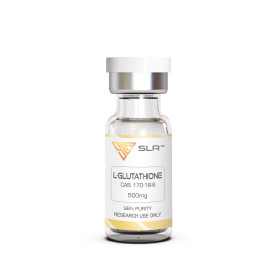
L-GLUTATHIONE - 500mg
€29.00
Tax excluded
IN-STOCK
favorite_border favorite
L-Glutathione is a naturally occurring tripeptide that has been extensively studied for its central role in cellular protection and metabolic balance. Research and experimental data indicate that L-Glutathione is associated with the following biological processes: Regulation of intracellular redox balance and antioxidant defenses Protection of cells from oxidative stress and reactive oxygen species Support of detoxification and cellular clearance pathways Modulation of immune and inflammatory signaling mechanisms Maintenance of mitochondrial function and cellular energy metabolism Preservation of protein structure and prevention of oxidative damage Involvement in cellular stress adaptation and aging-related processes
LIVAGEN - 10ml/100mg - Spray
€238.00
Tax excluded
IN-STOCK
favorite_border favorite
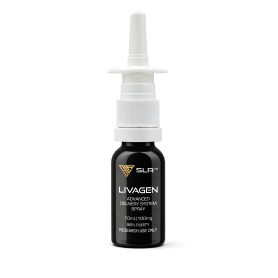
Livagen is a short bioregulatory peptide that has been investigated in experimental research for its influence on DNA organization and gene expression. It is primarily recognized for its association with chromatin decondensation, a process that increases DNA accessibility and has been linked to cellular profiles typically observed in younger cells. Scientific research has focused predominantly on immune system lymphocytes, where Livagen has been shown to modulate gene activity and cellular function. Through these mechanisms, Livagen has been studied for its involvement in biological processes related to immune regulation and signaling pathways associated with cardiovascular, gastrointestinal, neurological, and immune system function. Experimental findings have also explored Livagen’s role in nociception and pain-related signaling. Ongoing research continues to examine Livagen’s broader relevance in studies of aging, cellular senescence, and long-term biological regulation. FRESHLY PREPARED SOLUTION
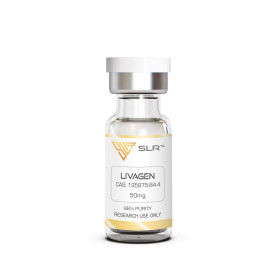
LIVAGEN - 50mg
€129.00
Tax excluded
IN-STOCK
favorite_border favorite
Livagen is a short bioregulatory peptide that has been investigated in experimental research for its influence on DNA organization and gene expression. It is primarily recognized for its association with chromatin decondensation, a process that increases DNA accessibility and has been linked to cellular profiles typically observed in younger cells. Scientific research has focused predominantly on immune system lymphocytes, where Livagen has been shown to modulate gene activity and cellular function. Through these mechanisms, Livagen has been studied for its involvement in biological processes related to immune regulation and signaling pathways associated with cardiovascular, gastrointestinal, neurological, and immune system function. Experimental findings have also explored Livagen’s role in nociception and pain-related signaling. Ongoing research continues to examine Livagen’s broader relevance in studies of aging, cellular senescence, and long-term biological regulation.
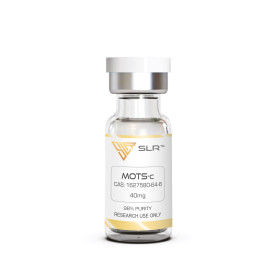
MOTS-c - 40mg
€139.00
Tax excluded
IN-STOCK
favorite_border favorite
MOTS-c is a mitochondria-derived peptide that has been widely investigated in experimental and preclinical research for its role in metabolic regulation and cellular energy balance. Scientific studies have examined MOTS-c in relation to biological pathways associated with physical performance, metabolic homeostasis, age-related processes, and systemic cellular signaling. Research has primarily focused on MOTS-c in the context of the following areas: Muscle Metabolism: Studied for its association with glucose utilization, energy handling, and metabolic adaptation in skeletal muscle. Fat Metabolism: Investigated for its involvement in adipose tissue regulation, lipid utilization, and pathways related to energy expenditure. Insulin Sensitivity: Examined in research models addressing early metabolic changes and glucose regulation mechanisms. Bone Metabolism (Osteoporosis Research): Explored for its role in pathways related to osteoblast activity, collagen production, and bone integrity. Longevity Research: Studied in relation to mitochondrial signaling, aging-associated pathways, and lifespan-related genetic variants. Heart Health: Investigated for its association with endothelial function, vascular signaling, and cardiovascular stress responses.
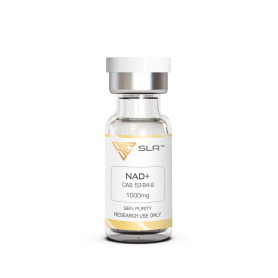
NAD+ - 1000mg
€64.90
Tax excluded
IN-STOCK
favorite_border favorite
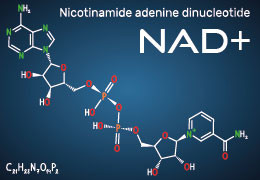
NAD⁺ (Nicotinamide Adenine Dinucleotide) is a central cellular coenzyme essential for mitochondrial energy production and redox balance. It plays a critical role in oxidative phosphorylation, ATP synthesis, and metabolic regulation. NAD⁺ also functions as a substrate for sirtuins and PARP enzymes, contributing to DNA repair, cellular stress resistance, and longevity-associated pathways. Due to its involvement in bioenergetics and cellular resilience, NAD⁺ is widely studied in mitochondrial function, metabolic regulation, and age-related biological processes
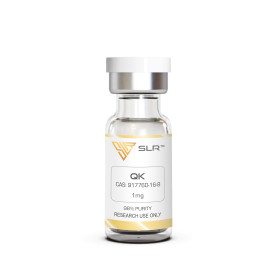
QK - 1mg
€85.00
Tax excluded
IN-STOCK
favorite_border favorite
QK is a synthetic peptide designed to mimic the activity of Vascular Endothelial Growth Factor (VEGF), one of the primary regulators of angiogenesis (the formation of new blood vessels). Unlike full-length VEGF, QK is a smaller and more stable molecule that retains the ability to bind endothelial receptors (particularly VEGFR-1), activating key biological pathways involved in vascular growth. Its primary effect is the stimulation of angiogenesis, through: endothelial cell proliferation and migration formation of new capillary structures improvement of microcirculation These properties make QK highly relevant in research related to: tissue regeneration wound healing ischemic conditions (reduced blood flow) endothelial function and vascular health In summary, QK is a targeted angiogenic mimetic, useful for studying controlled vascular growth in experimental settings, offering improved stability and control compared to natural VEGF.
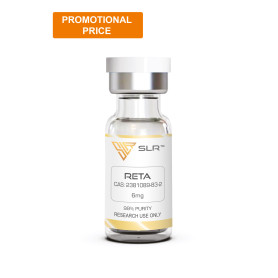
RETA - 6mg, 10mg
€44.00
Tax excluded
Promotional price while stocks last.
favorite_border favorite
INDEPENDENTLY TESTED • VERIFIED QUALITY ✓ Purity — HPLC analysis ✓ Identity — Mass spectrometry ✓ Net content — Verified on the 6 mg vial RETA 6 mg and 10 mg share the same peptide batch. The tested sample was a 6 mg vial. VERIFY COA AT FREEDOM DIAGNOSTICS → Enter search code: Suaw2605040577Reta is a next-generation metabolic research peptide classified as a multi-receptor agonist designed to interact with GLP-related, GIP-associated, and glucagon-mediated signaling pathways. By targeting multiple receptor systems simultaneously, it has become a key subject of investigation in studies focused on integrative metabolic regulation, energy balance, and complex signaling networks. Its molecular structure has been engineered to enhance stability and albumin binding, supporting an extended activity profile and improved pharmacokinetic characteristics in research environments. Current research explores its role in multi-pathway signaling dynamics, systemic regulatory processes, and advanced metabolic communication mechanisms.
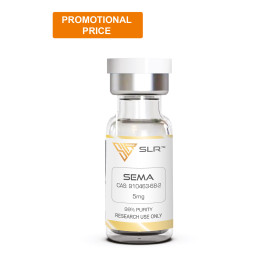
SEMA - 5mg, 10mg
€68.00
Tax excluded
Promotional price while stocks last
favorite_border favorite
INDEPENDENTLY TESTED • VERIFIED QUALITY ✓ Purity — HPLC analysis ✓ Identity — Mass spectrometry ✓ Net content — Verified on the 5 mg vial SEMA 5 mg and 10 mg share the same peptide batch. The tested sample was a 5 mg vial. VERIFY COA AT FREEDOM DIAGNOSTICS → Enter search code: Suaw2605040573SEMA is a synthetic metabolic research peptide belonging to a class of regulatory compounds associated with incretin-related signaling pathways. It is widely studied for its interaction with receptor-mediated mechanisms involved in glucose handling, energy balance, and systemic metabolic regulation. Research interest also extends to its role in broader signaling networks, including those associated with cardiovascular function and neuroendocrine communication, making it a key compound in modern metabolic research models.
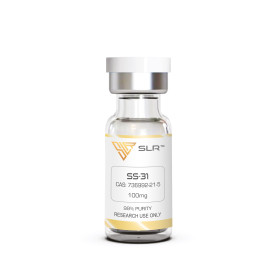
SS-31 - 100mg
€250.00
Tax excluded
IN-STOCK
favorite_border favorite
SS-31 (Elamipretide) is a mitochondria-targeting peptide studied for its ability to bind cardiolipin in the inner mitochondrial membrane, stabilize mitochondrial structure, and support cellular energy production. Research suggests that SS-31 may reduce mitochondrial oxidative stress by limiting reactive oxygen species accumulation, improving mitochondrial bioenergetics, and supporting membrane integrity. It has also been investigated for its ability to modulate the mitochondrial permeability transition pore (mPTP), potentially reducing apoptosis-related signaling under stress. Due to these mechanisms, SS-31 has attracted attention in research involving neurodegenerative diseases, cardiovascular disorders, age-related mitochondrial decline, and retinal diseases such as diabetic retinopathy and age-related macular degeneration.
SS-31 - 10ml/100mg - Spray
€298.00
Tax excluded
IN-STOCK
favorite_border favorite
SS-31 (Elamipretide) is a mitochondria-targeting peptide studied for its ability to bind cardiolipin in the inner mitochondrial membrane, stabilize mitochondrial structure, and support cellular energy production. Research suggests that SS-31 may reduce mitochondrial oxidative stress by limiting reactive oxygen species accumulation, improving mitochondrial bioenergetics, and supporting membrane integrity. It has also been investigated for its ability to modulate the mitochondrial permeability transition pore (mPTP), potentially reducing apoptosis-related signaling under stress. Due to these mechanisms, SS-31 has attracted attention in research involving neurodegenerative diseases, cardiovascular disorders, age-related mitochondrial decline, and retinal diseases such as diabetic retinopathy and age-related macular degeneration. FRESHLY PREPARED SOLUTION 
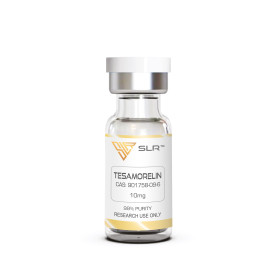
TESAMORELIN - 10mg
€69.00
Tax excluded
IN-STOCK
favorite_border favorite
Tesamorelin is a synthetic Growth Hormone-Releasing Hormone (GHRH) analogue designed for improved stability and extended activity in human plasma. By activating pituitary GHRH receptors, it stimulates endogenous growth hormone release while maintaining physiological pulsatile secretion patterns. This leads to increased downstream IGF-1 production, supporting anabolic and metabolic regulation. Research suggests tesamorelin may reduce visceral adipose tissue, support lean muscle maintenance, and influence metabolic health. It has been extensively studied in HIV-associated lipodystrophy, where reductions in abdominal fat have been associated with improved body composition markers and potential improvements in lipid-related cardiovascular risk factors. Emerging research also suggests possible relevance in cognitive aging and neuroendocrine function, as GH and IGF-1 pathways contribute to synaptic plasticity and brain metabolism.
THYMOSIN B-4 FRAG - 10ml/60mg - Spray
€146.00
Tax excluded
IN-STOCK
favorite_border favorite
Thymosin Beta-4 Fragment is a short peptide derived from the active region of Thymosin Beta-4, commonly employed in preclinical research to investigate actin-regulated cell migration, angiogenesis, inflammatory modulation, and tissue remodeling mechanisms. In experimental models, it has been studied for its involvement in wound-related cellular dynamics, oxidative stress responses, and regeneration-associated signaling pathways. FRESHLY PREPARED SOLUTION 
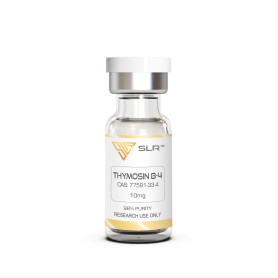
THYMOSIN BETA-4 (43aa) - 10mg
€79.00
Tax excluded
IN-STOCK
favorite_border favorite
INDEPENDENTLY TESTED • VERIFIED QUALITY ✓ Purity — HPLC analysis ✓ Identity — Mass spectrometry ✓ Net content  VERIFY COA AT FREEDOM DIAGNOSTICS → Enter search code: Suaw2605040574Thymosin Beta-4 (Tβ4), often associated with the peptide fragment TB-500 in research contexts, is a naturally occurring peptide involved in tissue repair, immune regulation, and cellular regeneration. Its primary mechanism is linked to actin-binding activity, supporting cytoskeletal remodeling and promoting cell migration essential for wound healing. Research suggests Tβ4 may stimulate angiogenesis, enhance collagen deposition, support keratinocyte and endothelial migration, and reduce inflammatory cytokine signaling through modulation of pathways such as NF-κB. It has been studied in experimental models of skin repair, corneal injury, dry eye conditions, cardiovascular remodeling after ischemic injury, systemic inflammation including sepsis models, neurological injury, autoimmune neuroinflammation, and musculoskeletal recovery. These properties make Tβ4 a major peptide of interest in regenerative biology and inflammation-related research.
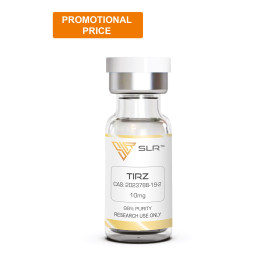
TIRZ - 10mg
€69.00
Tax excluded
Promotional price while stocks last
favorite_border favorite
INDEPENDENTLY TESTED • VERIFIED QUALITY ✓ Purity — HPLC analysis ✓ Identity — Mass spectrometry ✓ Net content  VERIFY COA AT FREEDOM DIAGNOSTICS → Enter search code: Suaw2605040575Tirz is a synthetic dual-receptor metabolic research peptide designed to interact with GIP-associated and GLP-related signaling pathways. By targeting multiple incretin-associated receptor systems simultaneously, it has become a key subject of investigation in studies focused on metabolic regulation, energy balance, and coordinated signaling networks. Its multi-pathway activity supports research into integrative metabolic processes, cellular signaling dynamics, and system-wide regulatory mechanisms involved in nutrient-response and energy homeostasis.
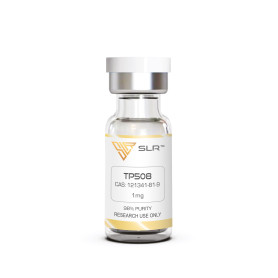
TP508 - 1mg
€170.00
Tax excluded
IN-STOCK
favorite_border favorite
TP508 is a 23–amino acid investigational regenerative peptide derived from amino acids 508–530 of human prothrombin. It has been studied for its ability to stimulate tissue repair by reversing endothelial dysfunction, promoting angiogenesis and revascularization, attenuating inflammation, and reducing apoptosis. Human studies have reported improved healing of diabetic foot ulcers and distal radius fractures, while animal studies suggest TP508 may stimulate bone regeneration in critical-size defects. Emerging evidence indicates that TP508 may activate tissue-derived stem/progenitor cells, which may contribute to its broad regenerative effects. Additional research has explored TP508 in cardiovascular ischemia models, where it increased perfusion and restored nitric oxide signaling through eNOS activation. TP508 has also been investigated as a potential countermeasure for radiation-induced gastrointestinal injury due to its potential role in supporting intestinal stem cell regeneration.
VESUGEN - 10ml/100mg - Spray
€229.00
Tax excluded
IN-STOCK
favorite_border favorite
Vesugen is a short synthetic bioregulatory peptide investigated for its role in vascular and neurovascular regulation. It belongs to a class of organ-specific peptides studied for their potential capacity to modulate gene expression patterns associated with endothelial stability, metabolic regulation, and cellular stress resistance. Experimental models have explored its interaction with genes such as p16 and p21 (cell cycle regulation), as well as pathways linked to SIRT1 activity, which is widely associated with metabolic control, stress adaptation, and longevity-related signaling mechanisms. Within neurovascular research contexts, Vesugen has been examined for its potential role in maintaining microvascular integrity and supporting oxidative balance in neural tissues. Additional research has evaluated Vesugen in the context of endothelial gene expression, nitric oxide signaling balance, and vascular membrane stability. Modulation of endothelin-1 expression and reduction of oxidative vascular markers have been reported in controlled laboratory studies. Overall, Vesugen is characterized in scientific literature as a vascular bioregulatory peptide investigated for its potential epigenetic modulation of gene expression related to endothelial function, neurovascular stability, metabolic balance, and cellular aging pathways. FRESHLY PREPARED SOLUTION 
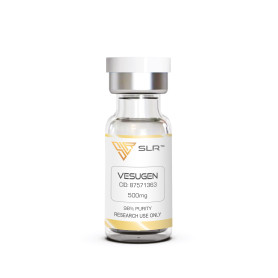
VESUGEN - 500mg
€780.00
Tax excluded
IN-STOCK
favorite_border favorite
Vesugen is a short synthetic bioregulatory peptide investigated for its role in vascular and neurovascular regulation. It belongs to a class of organ-specific peptides studied for their potential capacity to modulate gene expression patterns associated with endothelial stability, metabolic regulation, and cellular stress resistance. Experimental models have explored its interaction with genes such as p16 and p21 (cell cycle regulation), as well as pathways linked to SIRT1 activity, which is widely associated with metabolic control, stress adaptation, and longevity-related signaling mechanisms. Within neurovascular research contexts, Vesugen has been examined for its potential role in maintaining microvascular integrity and supporting oxidative balance in neural tissues. Additional research has evaluated Vesugen in the context of endothelial gene expression, nitric oxide signaling balance, and vascular membrane stability. Modulation of endothelin-1 expression and reduction of oxidative vascular markers have been reported in controlled laboratory studies. Overall, Vesugen is characterized in scientific literature as a vascular bioregulatory peptide investigated for its potential epigenetic modulation of gene expression related to endothelial function, neurovascular stability, metabolic balance, and cellular aging pathways.
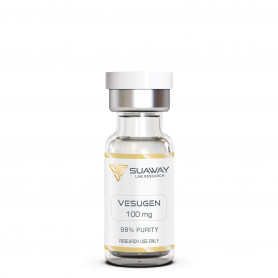
VESUGEN -100mg
€185.00
Tax excluded
IN-STOCK
favorite_border favorite
Vesugen is a short synthetic bioregulatory peptide investigated for its role in vascular and neurovascular regulation. It belongs to a class of organ-specific peptides studied for their potential capacity to modulate gene expression patterns associated with endothelial stability, metabolic regulation, and cellular stress resistance. Experimental models have explored its interaction with genes such as p16 and p21 (cell cycle regulation), as well as pathways linked to SIRT1 activity, which is widely associated with metabolic control, stress adaptation, and longevity-related signaling mechanisms. Within neurovascular research contexts, Vesugen has been examined for its potential role in maintaining microvascular integrity and supporting oxidative balance in neural tissues. Additional research has evaluated Vesugen in the context of endothelial gene expression, nitric oxide signaling balance, and vascular membrane stability. Modulation of endothelin-1 expression and reduction of oxidative vascular markers have been reported in controlled laboratory studies. Overall, Vesugen is characterized in scientific literature as a vascular bioregulatory peptide investigated for its potential epigenetic modulation of gene expression related to endothelial function, neurovascular stability, metabolic balance, and cellular aging pathways.
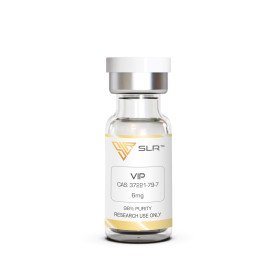
VIP - VASOACTIVE INTESTINAL PEPTIDE - 6 mg
€59.00
Tax excluded
IN-STOCK
favorite_border favorite
VIP (Vasoactive Intestinal Peptide) is a 28–amino acid neuropeptide of the secretin–glucagon family, widely expressed in the brain, gastrointestinal tract, pancreas, lungs, heart, thyroid, adrenal glands, and thymus. It acts through the GPCR receptors VPAC1 and VPAC2, activating cAMP-related signaling pathways that regulate vascular tone, immune balance, secretion mechanisms, and neuronal survival. Research suggests VIP has neuroprotective and neurotrophic properties, supporting blood–brain barrier integrity, reducing oxidative stress, and modulating neuroinflammation, with relevance in neurodegenerative models such as Alzheimer’s and Parkinson’s disease. VIP also regulates circadian rhythm via hypothalamic signaling, supports gastrointestinal motility and barrier integrity, and has immunomodulatory effects by reducing pro-inflammatory cytokines and promoting immune tolerance. Additional studies indicate antifibrotic and vasodilatory activity relevant to cardiovascular and pulmonary disease models, as well as potential relevance in transplantation tolerance research and lacrimal secretion regulation in dry eye-related conditions.
α-Klotho - 25mcg
€245.00
Tax excluded
IN-STOCK
favorite_border favorite
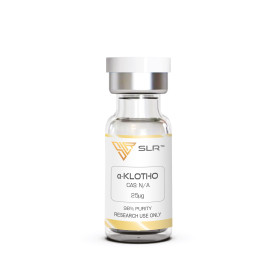
α-Klotho is a transmembrane and soluble endocrine protein first identified in 1997 and now widely recognized as a key candidate in aging biology. It is expressed predominantly in the kidney and choroid plexus of the brain, and its soluble form circulates in blood, urine, and cerebrospinal fluid. Membrane α-Klotho functions as an essential co-receptor for FGF23, regulating phosphate and vitamin D metabolism. Soluble α-Klotho is studied for its broader endocrine-like effects, including modulation of oxidative stress responses, inflammatory signaling, IGF-1 and mTOR pathways, and Wnt-associated tissue remodeling. Experimental models show that Klotho deficiency is linked to accelerated aging-like phenotypes such as vascular dysfunction, sarcopenia, cognitive decline, cardiac fibrosis, and osteopenia, while elevated Klotho expression is associated with improved cognition, delayed vascular aging, enhanced muscle regeneration, and increased lifespan. Due to its connection with senescence biology, SASP-driven inflammation, kidney decline, and neurodegenerative processes, α-Klotho remains a central molecule in research focused on longevity, metabolic regulation, and systemic resilience.