Active filters

TP508 - 1mg
€170.00
Tax excluded
IN-STOCK
favorite_border favorite
TP508 is a 23–amino acid investigational regenerative peptide derived from amino acids 508–530 of human prothrombin. It has been studied for its ability to stimulate tissue repair by reversing endothelial dysfunction, promoting angiogenesis and revascularization, attenuating inflammation, and reducing apoptosis. Human studies have reported improved healing of diabetic foot ulcers and distal radius fractures, while animal studies suggest TP508 may stimulate bone regeneration in critical-size defects. Emerging evidence indicates that TP508 may activate tissue-derived stem/progenitor cells, which may contribute to its broad regenerative effects. Additional research has explored TP508 in cardiovascular ischemia models, where it increased perfusion and restored nitric oxide signaling through eNOS activation. TP508 has also been investigated as a potential countermeasure for radiation-induced gastrointestinal injury due to its potential role in supporting intestinal stem cell regeneration.
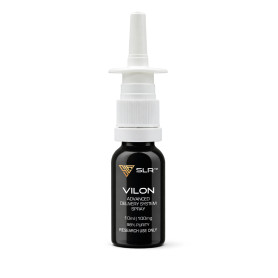
VILON - 10ml/100mg - Spray
€249.00
Tax excluded
IN-STOCK
favorite_border favorite
Vilon is a thymus-derived bioregulatory peptide commonly described as the dipeptide Lys–Glu (KE). It is studied for its potential immune-modulating effects, particularly in the context of thymus-related immune function and T-cell regulation. Research suggests Vilon may support immune cell differentiation, normalize cytokine signaling, and contribute to immune homeostasis. These properties make it relevant in studies involving immunosenescence, age-related immune decline, chronic inflammation, infection susceptibility, and immune dysfunction. By supporting balanced immune regulation rather than excessive stimulation, Vilon has become a peptide of interest in research focused on immune resilience, systemic vitality, and longevity-related immune restoration. FRESHLY PREPARED SOLUTION 
VILON - 50 mg
€120.00
Tax excluded
IN-STOCK
favorite_border favorite
Vilon is a thymus-derived bioregulatory peptide commonly described as the dipeptide Lys–Glu (KE). It is studied for its potential immune-modulating effects, particularly in the context of thymus-related immune function and T-cell regulation. Research suggests Vilon may support immune cell differentiation, normalize cytokine signaling, and contribute to immune homeostasis. These properties make it relevant in studies involving immunosenescence, age-related immune decline, chronic inflammation, infection susceptibility, and immune dysfunction. By supporting balanced immune regulation rather than excessive stimulation, Vilon has become a peptide of interest in research focused on immune resilience, systemic vitality, and longevity-related immune restoration.
VIP - VASOACTIVE INTESTINAL PEPTIDE - 6 mg
€59.00
Tax excluded
IN-STOCK
favorite_border favorite
VIP (Vasoactive Intestinal Peptide) is a 28–amino acid neuropeptide of the secretin–glucagon family, widely expressed in the brain, gastrointestinal tract, pancreas, lungs, heart, thyroid, adrenal glands, and thymus. It acts through the GPCR receptors VPAC1 and VPAC2, activating cAMP-related signaling pathways that regulate vascular tone, immune balance, secretion mechanisms, and neuronal survival. Research suggests VIP has neuroprotective and neurotrophic properties, supporting blood–brain barrier integrity, reducing oxidative stress, and modulating neuroinflammation, with relevance in neurodegenerative models such as Alzheimer’s and Parkinson’s disease. VIP also regulates circadian rhythm via hypothalamic signaling, supports gastrointestinal motility and barrier integrity, and has immunomodulatory effects by reducing pro-inflammatory cytokines and promoting immune tolerance. Additional studies indicate antifibrotic and vasodilatory activity relevant to cardiovascular and pulmonary disease models, as well as potential relevance in transplantation tolerance research and lacrimal secretion regulation in dry eye-related conditions.
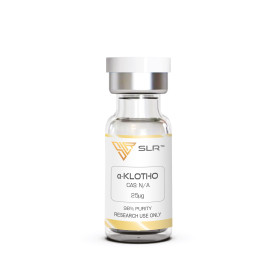
α-Klotho - 25mcg
€245.00
Tax excluded
IN-STOCK
favorite_border favorite
α-Klotho is a transmembrane and soluble endocrine protein first identified in 1997 and now widely recognized as a key candidate in aging biology. It is expressed predominantly in the kidney and choroid plexus of the brain, and its soluble form circulates in blood, urine, and cerebrospinal fluid. Membrane α-Klotho functions as an essential co-receptor for FGF23, regulating phosphate and vitamin D metabolism. Soluble α-Klotho is studied for its broader endocrine-like effects, including modulation of oxidative stress responses, inflammatory signaling, IGF-1 and mTOR pathways, and Wnt-associated tissue remodeling. Experimental models show that Klotho deficiency is linked to accelerated aging-like phenotypes such as vascular dysfunction, sarcopenia, cognitive decline, cardiac fibrosis, and osteopenia, while elevated Klotho expression is associated with improved cognition, delayed vascular aging, enhanced muscle regeneration, and increased lifespan. Due to its connection with senescence biology, SASP-driven inflammation, kidney decline, and neurodegenerative processes, α-Klotho remains a central molecule in research focused on longevity, metabolic regulation, and systemic resilience.